HALIA is the world's first drone engineered to remain on station for weeks with low detectability and launch in seconds — supporting maritime ASW, ISR, and strike missions for U.S. and allied forces.
The United States and its allies face a generational shift in maritime threat. New capabilities, new doctrine, and new technology are not optional — they are existential necessities for maintaining maritime superiority.
China's expanding fleet demands persistent, low-cost maritime surveillance across vast contested waters and critical strategic chokepoints.
Critical chokepoints lack persistent coverage — leaving allied fleets operationally blind in the zones where submarine threats are highest.
The P-8A Poseidon costs $200M+ per aircraft. High-tempo persistent ASW patrol is financially untenable at the scale the threat demands.
Adversaries deploy attritable drone swarms and A2/AD systems. Ukraine proves that unmanned systems win. The Navy must keep pace.
Every existing platform forces an impossible trade-off: persist at sea or respond from the air. HALIA is the first system built to dominate both domains simultaneously.
The world's first Float-Fly-Float unmanned drone. A persistent sea-air combat system built to operate with low detectability for weeks and respond in seconds in the world's most contested maritime environments.
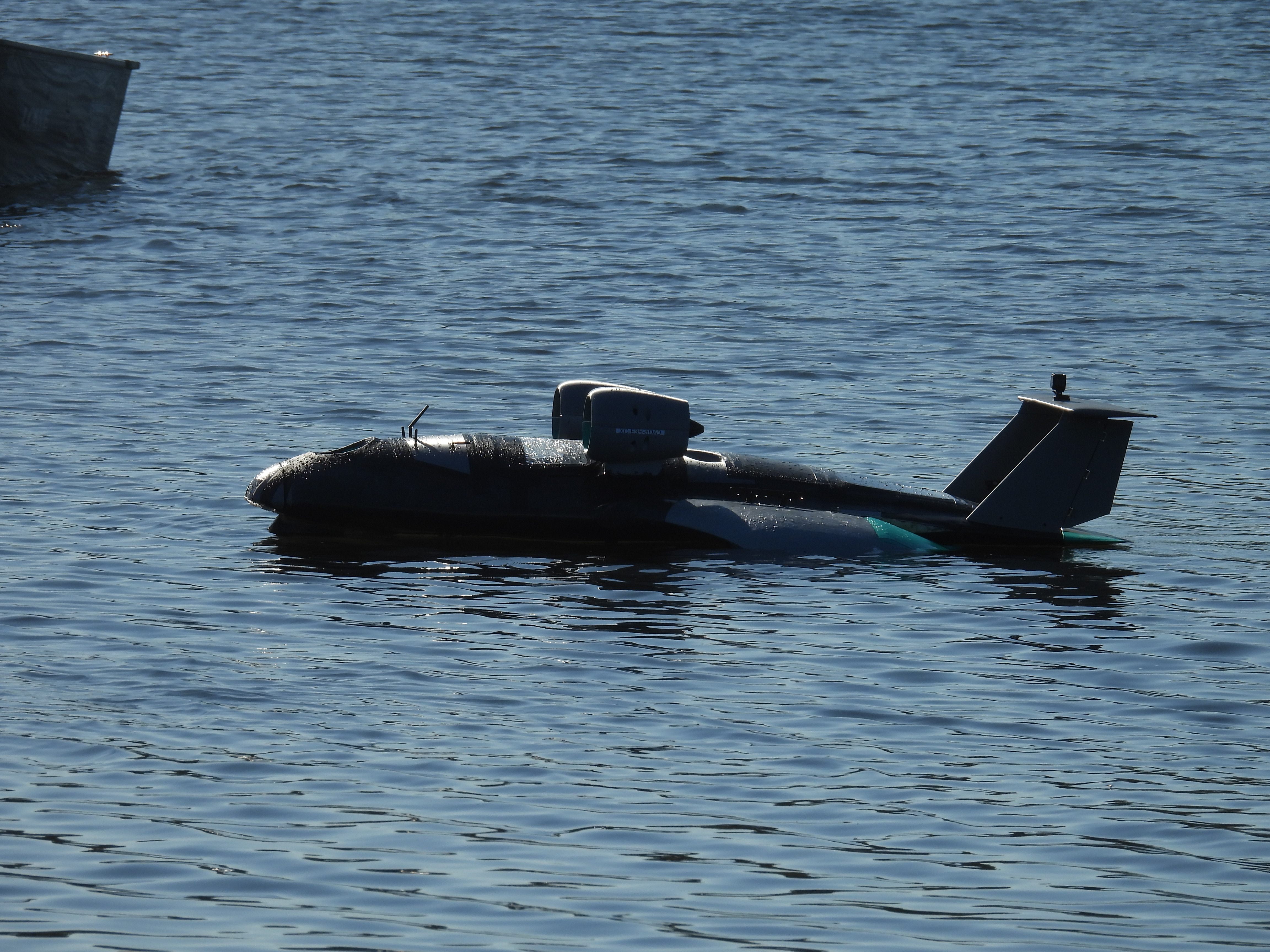
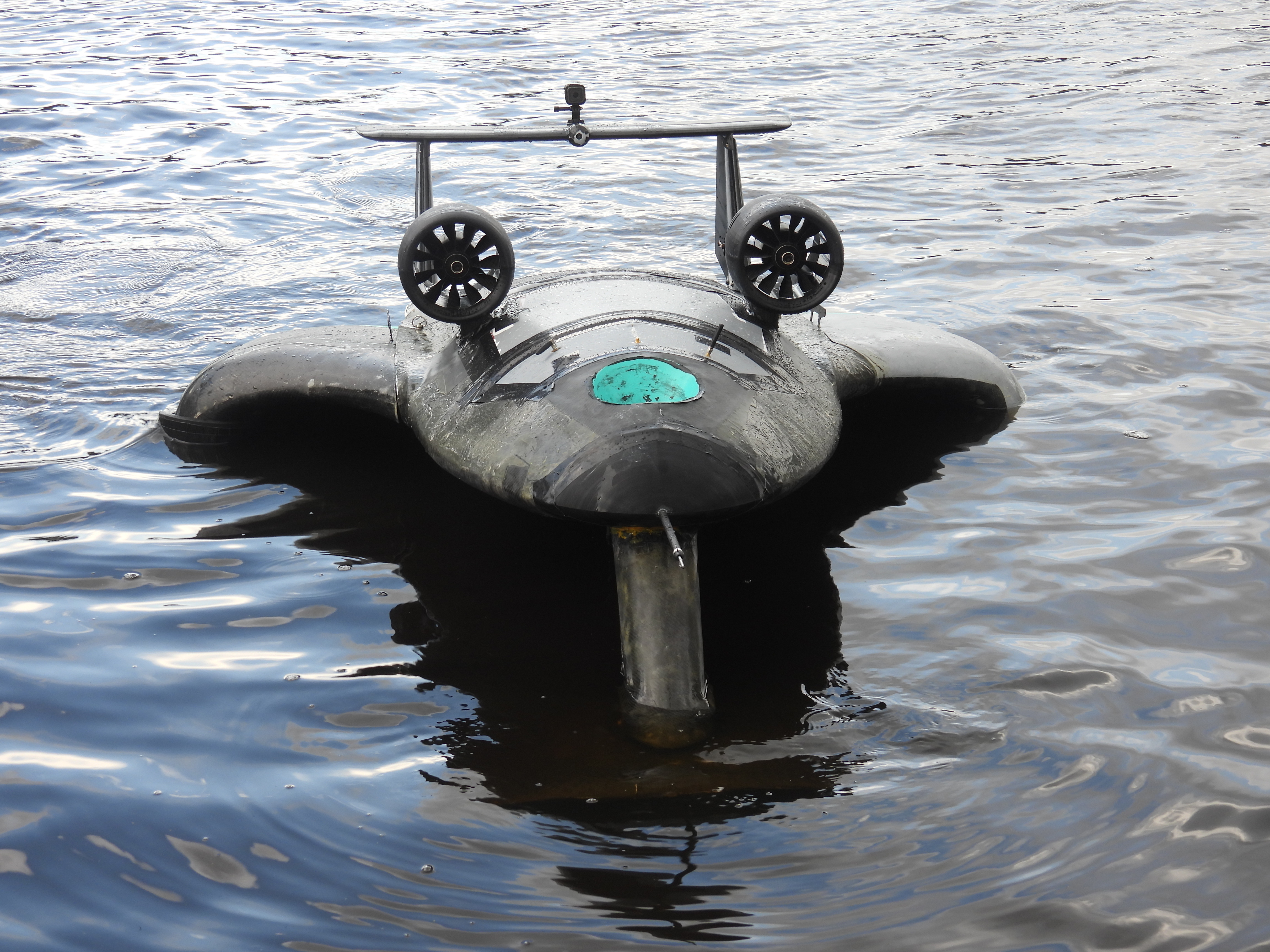
HALIA floats low — only ~1 foot above the surface — virtually invisible to radar and visual detection. Motors off. Energy conserved. Persistent ocean presence for weeks without a logistics tail, waiting silently for the moment to act.

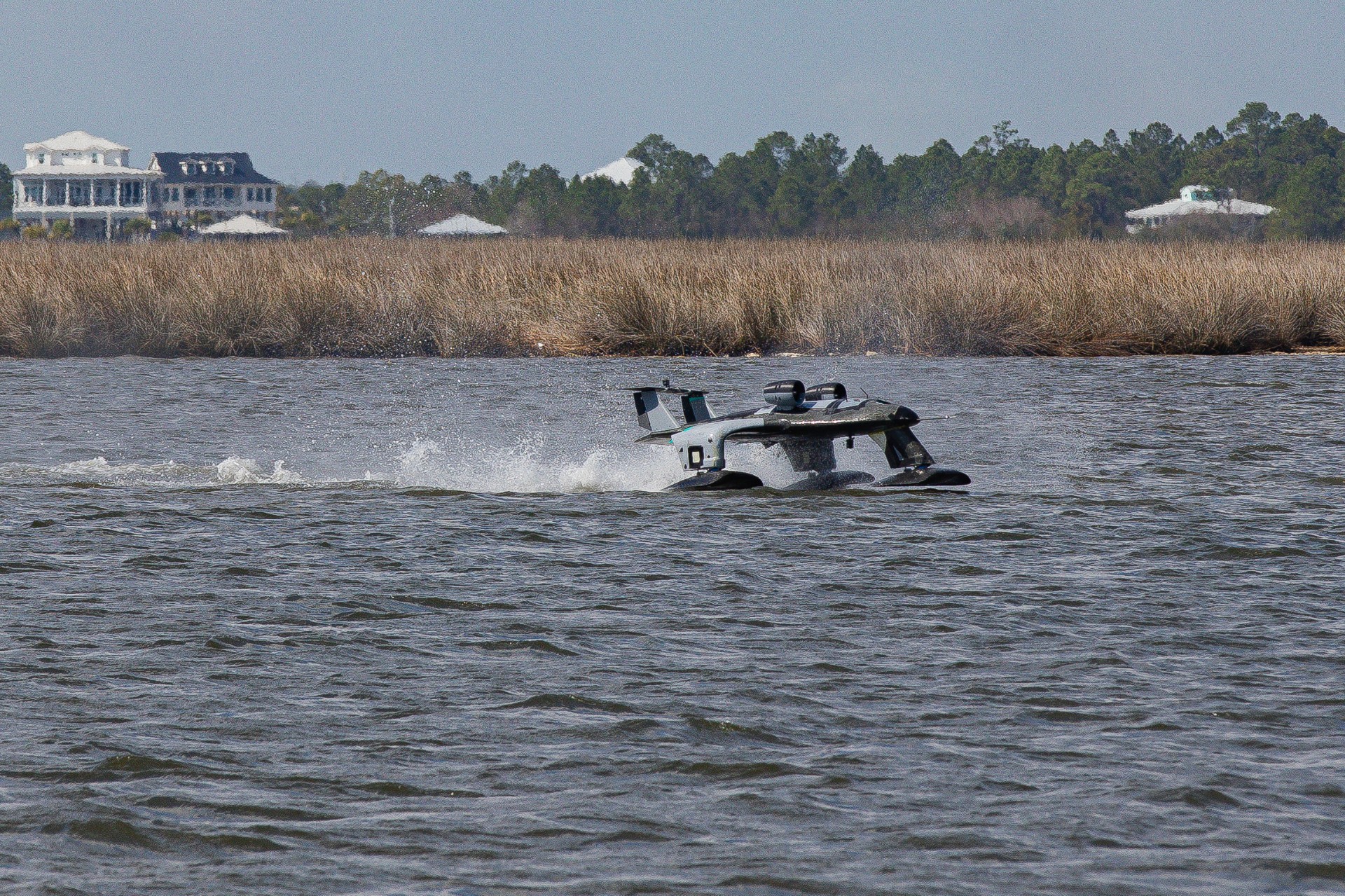
Patented HoverFoil™ technology blows air through specialized foils to dynamically change buoyancy, raising the platform and accelerating across the water's surface — building launch speed in seas up to 6-foot swells and 17+ knot winds.

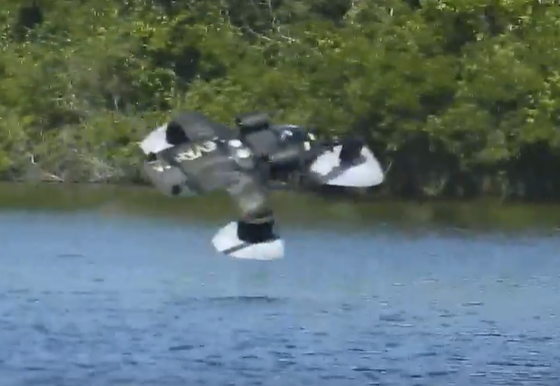
At sufficient speed, HALIA lifts off and climbs to altitude in seconds — transitioning from silent ocean sentinel to airborne asset. Execute ISR, strike, ASW sonar deployment, or relay missions at 100+ mph. Return to water. Repeat.

Only ~1 foot of body above water when floating. Extremely difficult to detect by radar or visually, enabling covert persistent presence in contested zones.
US Patent 12,221,210 B2. Variable buoyancy enabling sea-to-air transition in seconds. Defensible IP moat in the US and Europe with multi-year competitive advantage.
Takeoff and land in 6-foot seas and 17+ knot winds — conditions that ground every other maritime drone platform currently in operation or development.
18 lb payload capacity configurable for ISR sensors, comms relay, ASW sonobuoys, sonar arrays, strike payloads, or custom mission packages for any operation.
At a fraction of the cost of a P-8A Poseidon ($200M+) or a manned helicopter, HALIA can be deployed into high-threat zones where risking a $200M aircraft — or a human crew — is not an option.
Acts as a communications hub and sensor relay, dramatically amplifying the effectiveness of surface ships, submarines, and aerial drone networks already in the fleet.
This footage shows a planned short-hop test: HALIA skating across the surface, getting airborne, and landing before the waterway ended — exactly as intended. Not a long-range demonstration, just a controlled validation of the Float–Skate–Fly sequence using a real prototype in real water.
One of HALIA's most critical missions: patrol vast ocean corridors at speed, descend to the water's surface, deploy passive and active sonar arrays to listen for submarines, then re-launch to track and relay contacts in real time — all at a fraction of the cost of a P-8A sortie.
A single P-8A Poseidon costs $200M+ and $60K+ per flight hour. HALIA performs the same persistent ASW patrol at a fraction of the cost, with zero aircrew risk in contested areas.
Floating silently in the acoustic convergence zone, HALIA can maintain continuous passive sonar coverage for weeks — listening for submarine transits around the clock without resupply.
Capable of operations in 6-foot seas and 17+ knot winds. HALIA launches and recovers in conditions that would ground conventional seaplane drones and prevent small boat recovery operations.
Floating and repositionable mines are among the most dangerous and hardest-to-counter threats in modern maritime warfare — drifting silently with currents, nearly impossible to map from a distance. HALIA systematically sweeps ocean zones with mine-detection payloads, locates threats, and either reports their position to the fleet or neutralizes them directly — with zero crew in the minefield and no support vessel required.
The US Navy's mine countermeasures (MCM) fleet is aging and limited. Floating and repositionable mines are the hardest to counter — HALIA fills a gap no current platform can address at scale.
Deploy a swarm of HALIAs simultaneously to multiply coverage without multiplying cost or crew. Each unit operates independently, requiring no support vessel present in the threat zone.
Traditional minesweepers cost $50M+, require weeks to deploy, and put sailors directly in mined waters. HALIA removes every expensive asset and every human from the minefield entirely.
All three operational modes demonstrated in real test conditions. No simulations. No renderings.
No other platform combines weeks of sea persistence with high-speed flight and seconds-to-launch capability. HALIA is the only drone optimized for sea persistence — protected by patent.
| Platform | Type | Persistence | Top Speed | Launch | Sea Ops | Air Ops |
|---|---|---|---|---|---|---|
| ► LeVanta HALIA | Amphibious UAV | Weeks | 100+ mph | Seconds | Yes | Yes |
| Saildrone Voyager | USV | Months | 6 mph | N/A | Yes | No |
| Anduril Ghost 4 | UAV | Hours | 85 mph | Seconds | No | Yes |
| AeroVironment RQ-11 Raven | Small UAV | Hours | 60 mph | Seconds | No | Yes |
| Regent Viceroy | Seaglider | Hours | 190 mph | Runway | Limited | Yes |
| Poseidon Aerospace Seagull | Unmanned Seaplane | Hours | 110 mph | Water Run | Limited | Yes |
Two active SBIR Phase II contracts from the US Air Force and US Navy provide direct DoD validation of HALIA's technology. An international MOU with Ukraine adds a live-conflict proving ground to the program.
Active SBIR Phase II contract for maritime ISR — direct DoD validation of HALIA's technology and mission-critical applicability in contested maritime environments.
Active SBIR Phase II contract for persistent maritime surveillance — direct DoD validation of HALIA's technology for undersea detection and wide-area ocean coverage missions.
Signed MOU to develop, test, and build HALIA in Ukraine — a live conflict proving ground and one of the most demanding operational validation environments on earth.
Combined expertise spanning every discipline required to deliver HALIA from concept through operational deployment — engineers, Navy pilots, founders, and warfighters.
Engineer & Patent Attorney. 20 years guiding defense startups and global IP strategy. Architect of LeVanta's patent portfolio and government partnerships.
40+ years designing aircraft from commercial jets to advanced UAVs. Led the TVF 2026 Conference eVTOL panel.
15+ years managing US Navy UAS test programs. Navy Instructor Pilot in manned and unmanned platforms.
4x founder. Advised 30+ high-tech companies. Achieved 100X ROI exit. Deep operational and financial expertise.
Navy pilot and TOPGUN instructor. Former head of Office of Naval Research — London. Critical DoD acquisition guidance.
French Navy surface warfare officer. Leading LeVanta Maritime OÜ and NATO Europe strategy from Estonia.
America's Cup sailing background. Deep maritime operations expertise supporting HALIA sea trials and development.
CIA background providing strategic intelligence and national security expertise, guiding defense and intelligence positioning.
Whether you're a potential military customer, program manager, partner, or investor — we want to hear from you.